Quantum Encryption. Absolute Privacy.

Securing Solana with Post-quantum privacy infrastructure engineered to withstand 120-qubit–class and higher computational attacks

QVault Protocol by Vault-120
Step 1

Secure Entry & Adaptive Key Initialization

Your data enters the QVault node, where a new quantum-resilient key pair is generated for every session. Each keyset self-terminates on completion, ensuring no reusable signatures and zero exposure, even under 120-qubit-class analysis.
Lattice-derived post-quantum key exchange (Kyber / NTRU)

Lattice-derived post-quantum key exchange (Kyber / NTRU)

Lattice-derived post-quantum key exchange (Kyber / NTRU)

Ephemeral, one-time identity signatures

Ephemeral, one-time identity signatures

Ephemeral, one-time identity signatures

Real-time entropy regeneration per session

Real-time entropy regeneration per session

Real-time entropy regeneration per session

Step 2

Quantum-Class Encryption Layer

Within the node, every payload is sealed using multi-lattice encryption algorithms resistant to 120-qubit-class and higher computational attacks. Cipher layers rotate dynamically, making even adaptive qubit solvers statistically blind.

Hybrid NTRU / Kyber lattice encryption standards

Hybrid NTRU / Kyber lattice encryption standards

Hybrid NTRU / Kyber lattice encryption standards

Dynamic cipher-layer rotation architecture

Dynamic cipher-layer rotation architecture

Dynamic cipher-layer rotation architecture

Entropy-seeded randomness derived from quantum-noise simulators

Entropy-seeded randomness derived from quantum-noise simulators

Entropy-seeded randomness derived from quantum-noise simulators

Step 3

Zero-Knowledge + Quantum Integrity Layer

Each transaction is verified through a hybrid PQ-zkProof system that remains trustless even against 120-qubit-class solvers. Verification is completed without revealing payload data, preserving anonymity while ensuring mathematical certainty.
PQ-zkSNARK / zkSTARK hybrid validation

PQ-zkSNARK / zkSTARK hybrid validation

PQ-zkSNARK / zkSTARK hybrid validation

Trustless verification

Trustless verification

Trustless verification

Cross-chain proof anchoring with adaptive signatures

Cross-chain proof anchoring with adaptive signatures

Cross-chain proof anchoring with adaptive signatures

Step 4

Solana Storage & Recovery Layer

Encrypted packets are indexed across Solana nodes using post-quantum-secured replication. Each packet is recoverable through layered key shards while remaining opaque to both validators and external quantum-assisted analysis.
Sub-second finality & low transaction cost

Sub-second finality & low transaction cost

Sub-second finality & low transaction cost

Shard-based recoverable encrypted storage

Shard-based recoverable encrypted storage

Shard-based recoverable encrypted storage

Multi-node replication with verifiable audit trails

Multi-node replication with verifiable audit trails

Multi-node replication with verifiable audit trails

Protocol Fuel

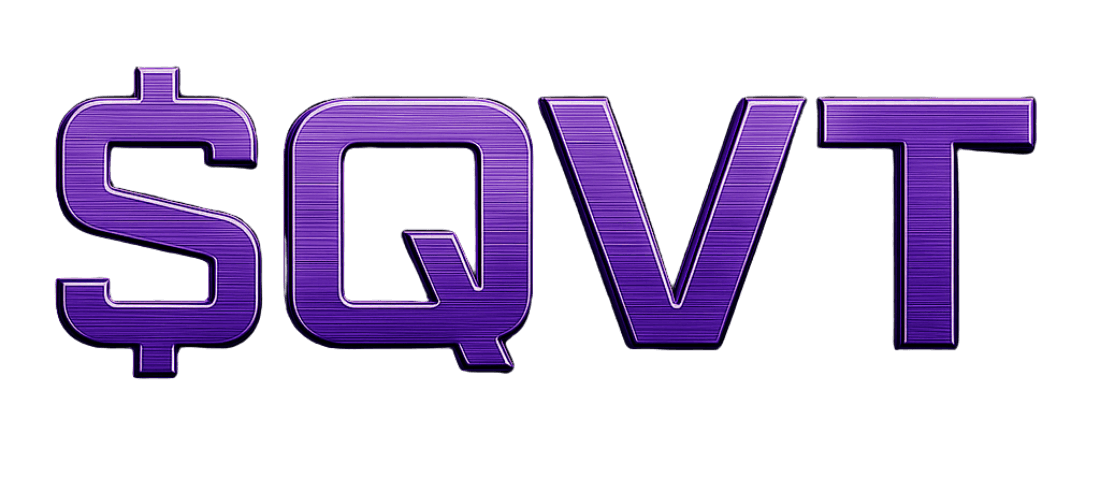
Each encryption cycle requires $QVT to execute, ensuring every operation remains cryptographically secure.

Protocol Fuel

Each encryption cycle requires $QVT to execute, ensuring every operation remains cryptographically secure.

Protocol Fuel

Each encryption cycle requires $QVT to execute, ensuring every operation remains cryptographically secure.

Node Staking

Validators stake $QVT to operate Vault Nodes, securing the network and processing encrypted payloads.

Node Staking

Validators stake $QVT to operate Vault Nodes, securing the network and processing encrypted payloads.

Node Staking

Validators stake $QVT to operate Vault Nodes, securing the network and processing encrypted payloads.

Network Rewards

Active participants earn $QVT for maintaining throughput, uptime, and encryption accuracy.

Network Rewards

Active participants earn $QVT for maintaining throughput, uptime, and encryption accuracy.

Network Rewards

Active participants earn $QVT for maintaining throughput, uptime, and encryption accuracy.

Governance Power

QVT holders guide Vault-120's evolution by voting on encryption standards, staking parameters, and grant allocations.

Governance Power

QVT holders guide Vault-120's evolution by voting on encryption standards, staking parameters, and grant allocations.

Governance Power

QVT holders guide Vault-120's evolution by voting on encryption standards, staking parameters, and grant allocations.

FAQ | Vault-120

FAQ | Vault-120

qVault PROTOCOL

> Initializing QVault summary...

QVault is a post-quantum privacy protocol engineered for 120-qubit-class and higher computational resistance. It safeguards blockchain transactions against next-generation quantum decryption attacks.

> Powered by Solana’s ultra-fast execution layer, enabling lightning-quick finality and modular interoperability with privacy-focused dApps.

> Core technologies: - - Lattice-based cryptography (Kyber-1024) - - Integrated ZK-proof privacy (Groth16) - - Modular node infrastructure

> SDK + API available soon for dApp integration.

>

qVault PROTOCOL

> Initializing QVault summary...

QVault is a post-quantum privacy protocol engineered for 120-qubit-class and higher computational resistance. It safeguards blockchain transactions against next-generation quantum decryption attacks.

> Built on Solana for unmatched throughput, sub-second finality, and modular integration with privacy-preserving dApps.

> Core technologies: - - Lattice-based cryptography (Kyber-1024) - - Integrated ZK-proof privacy (Groth16) - - Modular node infrastructure

> SDK + API available soon for dApp integration.

>

qVault PROTOCOL

> Initializing QVault summary...

QVault is a post-quantum privacy protocol engineered for 120-qubit-class and higher computational resistance. It safeguards blockchain transactions against next-generation quantum decryption attacks.

> Built on Solana for unmatched throughput, sub-second finality, and modular integration with privacy-preserving dApps.

> Core technologies: - - Lattice-based cryptography (Kyber-1024) - - Integrated ZK-proof privacy (Groth16) - - Modular node infrastructure

>

What is Vault-120?

What is QVault?

How is Vault-120 quantum-resistant?

Can developers integrate QVault into existing dApps?

What is the utility of the $QVT token?

When will the Vault-120 SDK be released?

How does Vault-120 differ from other privacy projects?

Why is Vault-120 built on Solana?

What is Vault-120?

What is QVault?

How is Vault-120 quantum-resistant?

Can developers integrate QVault into existing dApps?

What is the utility of the $QVT token?

When will the Vault-120 SDK be released?

How does Vault-120 differ from other privacy projects?

Why is Vault-120 built on Solana?

What is Vault-120?

What is QVault?

How is Vault-120 quantum-resistant?

Can developers integrate QVault into existing dApps?

What is the utility of the $QVT token?

When will the Vault-120 SDK be released?

How does Vault-120 differ from other privacy projects?

Why is Vault-120 built on Solana?